
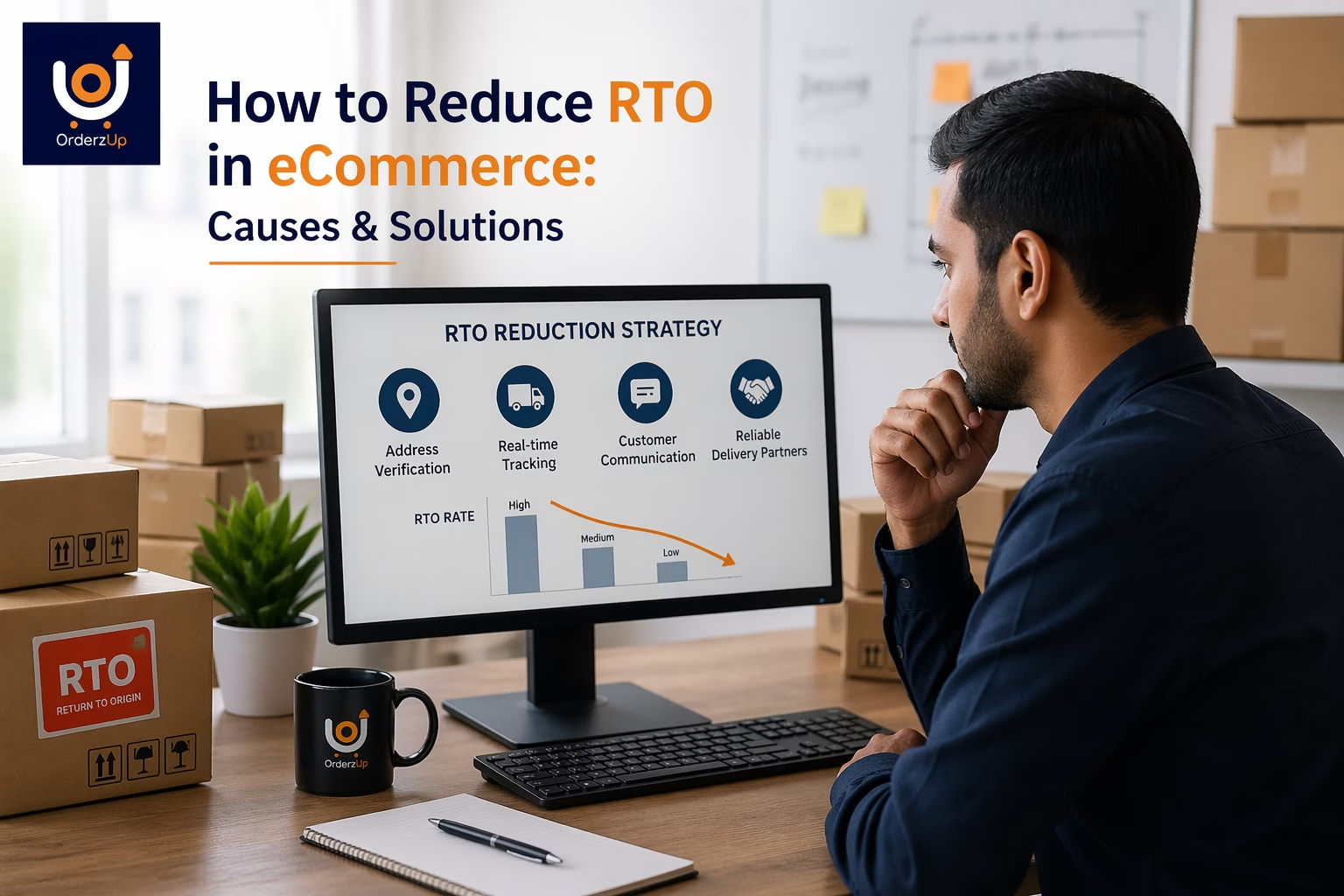
Return to Origin (RTO occurs when an order fails to reach the customer and is sent back to the seller’s warehouse. In other words, the customer never accepted the shipment, creating “double logistics” – the seller pays for shipping twice while losing the sale. This problem is especially acute in India’s booming eCommerce market, which is projected to reach $325 billion by 2030. As order volumes grow, so can RTO losses, directly hurting profitability. RTO orders block inventory, tie up capital and labour, and undermine customer trust. In practice, RTO often equals lost sales + extra costs + blocked inventory. For example, if a ₹1,000 sale is returned, the seller not only loses the ₹1,000 revenue but also spends ₹~170 on forward+reverse shipping and has the product stuck in transit. With hundreds of orders, these losses compound rapidly.
Why Reducing RTO Matters
Reducing RTO is critical for eCommerce businesses for several reasons:
- Cost Savings: Every RTO order incurs at least two delivery charges (forward and reverse) plus handling fees. Reducing RTO directly cuts these avoidable expenses.
- Improved Profit Margins: Lower RTO means fewer lost sales and less waste on logistics. Industry data shows that Cash-on-Delivery (COD) orders can have RTO rates of 28–35%, whereas prepaid orders often only see 4–8% RTO. Since COD-driven RTOs eat into margins, shifting the mix toward prepaid or confirming CODs more carefully can boost profitability.
- Brand Reputation and Trust: High RTO rates signal delivery issues. Frequent returns and failed deliveries can erode customer confidence. Customers who repeatedly face missed deliveries or damaged parcels are less likely to reorder, hurting loyalty. By keeping RTO rates low, businesses improve customer experience and word-of-mouth.
- Operational Efficiency: RTO orders clog the supply chain – warehouses must receive, inspect, and restock returned items. This wastes labour and slows down fulfillment for other orders. Reducing RTO streamlines operations and frees up inventory for new sales.
In sum, each RTO is not just a failed delivery but twice the work and cost. For growing Indian eCommerce firms, even a single-digit drop in RTO can translate to substantial savings and faster growth.
Common Causes of High RTO Rates
To tackle RTO, sellers must first understand why orders go undelivered. Some frequent causes in the Indian context include:
- Incorrect or Incomplete Addresses: A wrong PIN code, incomplete street details, or a typo in the address can prevent delivery. Studies show that many RTOs happen simply because customers entered incorrect or partial addresses at checkout. When couriers cannot find the address, they ultimately return the parcel.
- Customer Unavailability: If the recipient is not home after multiple delivery attempts, the package goes back. This is common when orders are sent to workplaces (where someone may not be present) or during customers’ busy periods. Without effective communication, even a correct address can fail because the customer couldn’t take delivery.
- Cash-on-Delivery (COD) Refusals: COD orders have much higher RTO rates than prepaid. In India, a large share of eCommerce is COD, and one report finds COD transactions contribute up to 76–83% of total RTO volume, with 28–35% of COD orders ultimately RTOing. Another analysis notes COD RTO rates as high as 20–40%. Customers may change their minds at the door, decide they don’t want to pay, or never intended to purchase (some see COD as “free shopping”). Each refused COD order is a guaranteed RTO.
- Damaged or Mismatched Products: Products that arrive damaged, defective, or not as described are often refused by customers. Poor packaging or dropshipping mistakes can lead to mismatches (wrong size, color, etc.) and increase RTO. In fashion/footwear, for example, fit and size mismatches can push return rates to 30–35%. Even non-fault cases (like a premium-looking item arriving underwhelming) can cause a customer to reject the package at delivery.
- Order Cancellations / Buyer’s Remorse: Sometimes customers order impulsively or place multiple orders and cancel later. If an order is canceled after shipment without the seller stopping dispatch, the shipment is RTO. According to Snapmint, many RTOs stem from customer indecision or late cancellations. Over-ordering and then canceling essentially converts an accepted order into an RTO.
- Fraudulent or Fake Orders: A portion of RTOs come from prank or fraudulent orders. New or small sellers, in particular, see random COD prank orders where the buyer never intends to pay. Detecting these “fake” orders is crucial, as each fraudulent COD attempt results in RTO and wasted shipping costs.
- Delivery Delays and Communication Gaps: Late or unclear deliveries frustrate buyers. If a parcel arrives much later than promised, or without notification, the customer might refuse it. Zippee notes that lack of rider updates and unexpected delays increase delivery failures. Without real-time tracking or proactive SMS/WhatsApp alerts, customers may assume an order was lost and cancel it at reception.
By recognizing these common triggers, sellers can apply targeted fixes. The next section outlines effective strategies to address each of these causes.
Strategies to Reduce RTO
The good news is that many RTO causes are preventable. The following strategies, proven in the Indian eCommerce context, can dramatically lower RTO rates:
- Improve Address Accuracy at Checkout: Use smart address validation and auto-complete tools so customers can only select verified addresses. For example, integrate APIs that auto-fill PIN codes, city names, and landmarks as the customer types. Requiring email/phone OTP verification can also reduce typos. Immediately after order placement, send an SMS or WhatsApp confirmation of the full address, asking the customer to confirm or correct it. Even one extra check (e.g. “We will confirm your address via SMS”) can cut down “sloppy address” errors, which are a top RTO cause.
- Encourage Prepaid and Multiple Payments: Since COD has much higher RTO, shift customers toward prepaid payment methods. Offer small incentives (discounts, cashback, loyalty points, or faster delivery) for prepaid orders. Clearly display UPI, digital wallet, and EMI options on checkout, and add pay-later/BNPL buttons to make online payment convenient. Even partial prepaid (e.g. small upfront token) can deter impulsive COD rejections. Diversifying payment also prevents lost sales: if a COD order fails, some businesses move customers to alternate payments quickly to salvage it.
- Optimize COD Policies: For COD orders that remain, add safeguards. Limit COD for first-time or high-value customers, and include mandatory OTP verification for COD checkouts. Before shipment, confirm COD orders via WhatsApp/IVR or a “Confirm Order” SMS button. This step filters out prank or non-serious orders. Geographically, you may restrict COD in PIN codes with historically high RTO, or add extra verification (like a quick call) for risky areas. These checks preserve payment flexibility while blocking obvious RTO triggers.
- Provide Detailed Product Info: Ensure listings have accurate, detailed descriptions and high-quality images. Spell out dimensions, materials, colors, and usage clearly. Include size guides especially for apparel (customize per brand, since Indian sizing varies). When customers know exactly what to expect, dissatisfaction drops. Misleading visuals or skimpy specs cause many returns and RTO refusals. Regularly audit product pages: “Does the photo match reality?” and “Is each specification complete?” If not, update it. Transparency lets customers make informed choices, preventing size/quality surprises at delivery.
- Invest in Better Packaging: Protecting the product reduces RTO due to damage. Use sturdy boxes, bubble wrap, and secure seals. Label packages clearly (fragile stickers, correct product info) to prevent handling errors. Good packaging avoids transit damages that lead to rejections. For fragile items, test the packaging by shaking or dropping a packed box; if anything feels loose or breaks, reinforce it. Also, include simple unpack instructions. When products arrive intact and well-presented, customers are more willing to accept them.
- Optimize Delivery Experience: Work with courier partners to improve first-attempt delivery success. Allow customers to choose preferred delivery time slots or locations (home vs office). During processing, communicate the expected delivery date and time clearly. Send multiple reminders – for example, a SMS or WhatsApp note one day before dispatch, another on dispatch, and one hour before delivery. Real-time tracking links empower customers to plan for receipt. If a customer can easily reschedule or reroute through the tracking app, a missed delivery doesn’t automatically become an RTO. Each bit of transparency (ETA updates, courier contact info) boosts the chance of a smooth handoff.
- Streamline Order Confirmation: Prevent accidental or fraudulent orders post-checkout. Besides address checks, offer customers an easy way to cancel or modify orders before shipping. For instance, include a “Modify Order” button in the post-purchase confirmation email. If a customer can cancel a mistaken order quickly, it avoids an involuntary RTO later. Additionally, use simple scripts to flag suspicious orders: for example, multiple large orders from the same new customer, or the same phone number across accounts, can be held for manual review. These pre-shipment controls catch many potential RTO cases early.
- Leverage Data and AI: Modern tools can auto-flag high-risk orders using AI/ML. Analytics can score each order by risk factors (COD, first-time buyer, remote PIN code, etc.). Orders above a risk threshold can trigger extra steps (like manual address check or COD confirmation). Address-Validation APIs automatically score address quality and prompt corrections. For example, platforms like OrderzUp pre-validate addresses and phone numbers, and run predictive checks to block risky and duplicate orders before shipping. OrderzUp claims its AI tools can “cut RTO losses by up to 30%”. By using data-backed verification, sellers catch many errors and fraud signals before an order ever goes to the courier.
- Analyze RTO Patterns: Regularly review RTO data by geography, courier, product, and customer segment. Are certain PIN codes repeatedly problematic? Is one logistics partner returning more parcels? Data can reveal if specific products have higher refusal rates (due to weight, fragility, or category). Use this insight to take action: maybe switch couriers in a region, update product descriptions for a problematic SKU, or set order limits on a frequent offender. As the Pragma analysis notes, smart brands see RTO as a signal and intervene strategically. Even simple steps like tagging high-RTO PINs as “verify before ship” can prevent patterns from recurring.
- Offer Flexible Return/Exchange Options: Sometimes an order is on its way back, but you can still salvage revenue. If a customer refuses an item on delivery, immediately offer an exchange (right size/color) instead of a full return. Make the process easy: pre-print return/exchange labels, and provide clear instructions. Quick exchanges keep revenue in-house. For example, Shiprocket recommends “facilitating exchanges instead of outright returns” to retain customers and recover sales. Even if an RTO happens, quickly contacting the customer with a swap option (via call or WhatsApp) can turn a lost sale into a completed one.
By combining these tactics – address checks, payment options, customer communication, and technology – eCommerce sellers can significantly lower RTO rates.
Leveraging Technology and Platforms
Technology solutions can amplify these strategies. Modern logistics platforms (courier aggregators) and eCommerce apps offer built-in RTO-reduction tools:
- AI Address Validation: Automatically verify and correct addresses at checkout. This prevents many RTOs upfront.
- Fraud/Risk Engines: These flag or block suspicious orders. For instance, OrderzUp’s system uses AI to pre-screen orders and claims to “cut RTO losses by up to 30%” through its address and fraud detection checks. Similarly, other automation tools can enforce phone OTPs, geo-validate locations, or detect duplicate orders without manual work.
- Courier Intelligence: Aggregators like Shadowfax or Shipmozo let you choose carriers per shipment based on on-time performance. If a certain courier struggles in a zone, the system can reroute future packages to a better performer, reducing failed deliveries.
- Real-Time Analytics: Dashboards that track RTO by cause enable proactive measures. You can set alerts if daily RTO spikes or if a new PIN code suddenly shows high returns. Having this visibility means you’re not guessing; you know exactly where to focus (e.g. “Blacklist these coordinates” or “improve packaging for these SKUs”).
Using such tech smartly lets sellers cut manual effort and catch problems early. Many Indian D2C brands now rely on platforms (including OrderzUp) to automate address checks and optimize their shipping – which in turn shrinks RTO rates without extra work.
Conclusion
RTO is a pervasive “tax” on Indian eCommerce – but it can be reduced with a combination of careful processes and smart tools. By ensuring accurate addresses, setting proper payment policies, improving customer communication, and leveraging data intelligence, sellers protect their margins and build customer trust. Even small RTO rate improvements (for example, cutting a 30% COD RTO rate down to 20%) translate into large cost savings and freed-up inventory. In practice, achieving low RTO requires ongoing attention: confirm CODs, monitor shipment data, and continuously refine your approach.
Several RTO-prevention strategies run in parallel: every ₹30 saved on forward shipping, every hour saved in restocking, and every happy customer who receives exactly what they expected contributes to a healthier business. As one logistics analysis notes, smart brands treat RTO not just as a last-mile failure but as a signal to improve the whole order journey. In the competitive Indian market, those who minimize RTO will see better profits, happier customers, and a stronger brand reputation.
Why is RTO higher in India compared to other markets?
RTO is higher in India mainly due to a high dependence on Cash-on-Delivery (COD), address inaccuracies, fake or impulsive orders, and limited customer availability during delivery attempts. COD orders in India typically have significantly higher RTO rates than prepaid orders, making RTO reduction a major challenge for Indian eCommerce businesses.
How can eCommerce sellers reduce RTO effectively?
eCommerce sellers can reduce RTO by verifying customer addresses and phone numbers, encouraging prepaid payments, confirming COD orders before shipping, improving delivery communication, and using data-driven tools to identify high-risk orders. Automating these steps through logistics and order intelligence platforms helps reduce RTO at scale
Does prepaid payment really help in reducing RTO?
Yes, prepaid orders have a much lower RTO rate compared to COD orders. Customers who pay online are more committed to receiving the order, which reduces last-minute refusals. Offering incentives like discounts, faster delivery, or cashback on prepaid orders is one of the most effective RTO-reduction strategies.
What role does technology play in reducing RTO?
Technology plays a crucial role in reducing RTO by enabling address validation, fraud detection, customer risk scoring, courier performance analysis, and real-time delivery tracking. Advanced platforms (such as modern shipping aggregators and order intelligence systems) help sellers identify and prevent high-risk orders before they are shipped, leading to lower RTO and better delivery success rates.
I appreciate the insights into RTO costs. It’s often overlooked that RTO not only increases logistics costs but also ties up valuable inventory. I’ve found that improving address verification and order confirmation processes can significantly reduce these issues.