
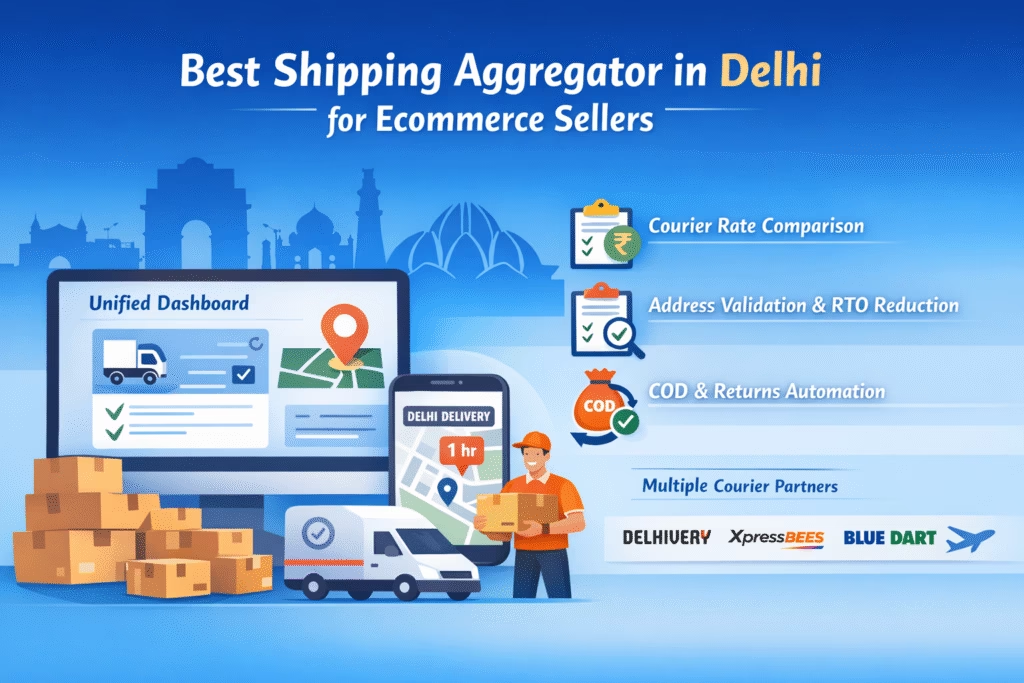
Efficient shipping is critical for Shopify and D2C brands, and Delhi’s unique logistics environment makes it even more important. A shipping aggregator (also called a courier or logistics aggregator) is a platform that connects online sellers to multiple courier partners through one dashboard. Instead of signing up separately with dozens of carriers, an e-commerce seller in Delhi can use an aggregator to compare rates, auto-generate labels, and schedule pickups with just a few clicks. Modern aggregators often use real-time tracking and AI routing to optimize delivery, helping businesses reduce delays and costs. In short, an aggregator acts like a “digital marketplace” for shipping: it vastly expands your delivery options (often covering 27,000–29,000+ PIN codes nationwide) while automating routine logistics tasks.
Delhi’s dense neighborhoods – from planned sectors like Dwarka to old-city lanes like Chandni Chowk – challenge generic delivery systems. Using an aggregator that ties into local and national courier networks can improve success rates. For example, platforms like AAJ Swift explicitly market themselves as a logistics aggregator for Delhi/NCR, offering TMS integration and on-time regional delivery. This means sellers benefit from carriers familiar with Delhi’s roads, as well as the big couriers (Blue Dart, Delhivery, etc.) that cover the rest of India.
Why Delhi E-commerce Sellers Need an Aggregator
- Access to Many Carriers & Lower Costs: Aggregators immediately connect you to dozens of courier networks (e.g. Delhivery, Blue Dart, DTDC, XpressBees). By comparing rates across carriers, you can choose the fastest or cheapest option per order. This not only maximizes coverage (India has 29,000+ PIN codes) but also leverages volume discounts. In practice, sellers often cut shipping spend by routing large volumes through the most cost-effective couriers.
- Automation & Integration: Instead of manually copying order details into each courier’s portal, an aggregator syncs your orders from Shopify or other stores automatically. Many platforms offer one-click Shopify/marketplace plugins so new orders immediately enter the shipping system. The dashboard can then auto-fill addresses, print labels, and schedule pickups without duplicate work. Real-time tracking updates and shipment notifications are also centralized, saving support time.
- Reduced Errors & RTO: Automated processes and intelligent validation significantly cut down failed deliveries (RTOs). For example, advanced aggregators use AI to pre-validate addresses or flag suspicious orders before shipping. This means fewer packages sent to wrong locations and fewer returns. Shipdockets notes that automation replaces manual address entry, reducing mislabels and RTO incidents. In fact, one study suggests Indian D2C brands lose over 20% of revenue to returns; tools like address-validation directly address that waste.
- Fast COD & Returns Handling: Many Delhi shoppers still use Cash-on-Delivery (COD), which can tie up cash flow. Aggregators often offer quick COD remittance plans. For instance, NimbusPost touts next-day COD payouts for delivered orders, speeding up cash recovery. Aggregators also automate return/NDR processes: they can automatically call COD customers to reduce fake orders or retry failed deliveries without extra pickup costs. This keeps inventory moving and reduces cash-strain.
- Scalable Operations: As your Delhi e-commerce business grows, the aggregator scales with you. Instead of contracting new couriers manually, you simply rely on the platform’s network. Large aggregators already have high-volume clients (thousands of orders daily) and handle peak loads by pooling many delivery agents. This means your logistics can keep up with festivals or promotions. Many provide dedicated account managers and 24×7 support to quickly resolve issues.
In summary, a shipping aggregator offers Delhi sellers a one-stop shipping solution: a unified dashboard for multi-courier shipping, automated workflows, and analytics to control costs and delivery performance. The right platform will feel like an in-house logistics team, just powered by software.
Key Features to Look For
When evaluating shipping aggregators, Delhi sellers (especially on Shopify or other online platforms) should prioritize:
- Wide Courier Network & Pin Code Coverage: Look for platforms that integrate all major carriers and cover virtually all Indian PIN codes. Industry leaders serve ~27,000–29,000+ PINs. This ensures even remote shipments out of Delhi (e.g. to Himachal villages) are handled smoothly.
- Platform Integration: Check that the aggregator connects easily with your tech stack. Shopify plugins or API support for marketplaces (Amazon, Flipkart, WooCommerce, etc.) are must-haves. Auto-syncing orders saves hours of manual work. Also review if they connect to accounting or ERP tools if needed.
- Automation & AI Tools: Good aggregators offer intelligent features. This can include automated courier selection (choosing the cheapest or fastest carrier per rules you set) and AI-based recommendations. For example, Pickrr and Shiprocket provide AI-driven rate comparisons. OrderzUp goes further by using AI to validate addresses and detect fraud before shipping. Such tools help reduce RTO and shipping fraud, saving money.
- Pricing Model: Understand how you pay. Most aggregators use pay-per-shipment rates (sometimes with subscription plans or volume slabs). Some (like Pickrr) even offer flat-rate shipping plans, simplifying cost predictions. Compare the base rates, COD surcharges, and any subscription fees. Also check if there are minimum volume requirements or hidden charges. The cheapest option often depends on your typical parcel weight and destinations.
- COD & Remittance Policies: If you ship COD, note how soon you get paid. NimbusPost, for instance, promises next-day COD settlements, whereas others may take 10–15 days by default. Faster payouts improve cash flow. Also see if the platform advances COD funds (for a fee) and how it manages returns or reattempts (some offer automated callbacks to customers).
- Support & Service: Customer support is crucial when deliveries go wrong. Look for 24×7 chat or hotlines, and an account manager if your volume is high. Some platforms assign managers to mid-size sellers for proactive help. Also consider language support – local aggregators or Mumbai-based teams may provide Hindi support alongside English.
- Analytics & Control: A good shipping platform provides dashboards on delivery status, courier performance (e.g. on-time rate, RTO rate), and shipment cost analysis. These analytics help you spot problem areas (like high RTO with a particular pin code) and adjust strategy. Branded tracking pages (with your logo) are also a nice touch to improve customer experience.
- Local Delivery Options: For hyperlocal delivery in Delhi NCR, check if the aggregator integrates with fast-bike couriers. Some, like BigShip, specialize in Delhi’s ecosystem, offering 3-hour or same-day delivery across the city. Even if you ship nationally, having the option of local quick-delivery carriers can delight customers.
Leading Shipping Aggregators for Delhi E-tailers Delhi e-commerce sellers have many aggregator platforms to choose from. Below are some notable options
OrderzUp: A newer AI-powered aggregator specifically targeting D2C brands. It boasts one-click Shopify integration and connects to 20+ courier partners, automatically choosing the best rate. OrderzUp stands out for built-in address validation and predictive fraud detection, which helps slash RTO. (Like others, it consolidates tracking and analytics in one place.) Including OrderzUp in your evaluation ensures you see cutting-edge features, though it may still be in beta rollout.
- Shiprocket: One of India’s oldest and largest aggregators, with ~17+ courier partners covering ~27,000+ PIN codes. It offers easy integration (Shopify/WooCommerce/Amazon/Flipkart plugins) and an automated “Courier Recommendation Engine” for cost or speed. Shiprocket is battle-tested for high volumes; its basic plans start around ₹26–₹29 per 500g. (Note: support can be slower during peaks.)
- NimbusPost: A tech-centric platform tied to 27+ couriers with ~29,000+ PIN coverage. It is popular with fast-growing D2C brands. Key features include a cloud dashboard for instant rate quotes and next-day COD payouts. NimbusPost also offers smart features like automated calling to COD customers to cut fake orders. This platform suits sellers who prioritize transparency and rapid payments (though very small shops may find its interface robust for enterprise).
- Pickrr: Known for flat-rate pricing and remote coverage. Pickrr connects to 20+ carriers (serving ~29,000+ PINs). Its standout feature is fixed-price slabs (e.g. ₹26–₹29 per 500g) that get cheaper with volume. Pickrr provides branded tracking pages and claims AI courier selection (≈99.5% delivery success). It’s a good fit for growing D2C brands needing simple budgeting and wide reach. Pickrr’s AI dashboard can easily integrate with Shopify and other e-commerce platforms.
- Shyplite: A mature gateway covering ~16+ couriers and 25,000+ PINs. Shyplite emphasizes reliability and support. Its AI-driven engine auto-selects the best courier per order, and it offers branded tracking/notifications. It also integrates out-of-the-box with Shopify, Magento, etc.. Shyplite pays COD weekly by default (earlier plans limited), so smaller merchants may prefer a faster option if cash flow is a concern.
- BigShip: A Delhi/NCR-focused aggregator and 3PL. It offers door-to-door 3-hour and same-day delivery within Delhi/NCR and integrates 17+ courier partners. BigShip claims coverage of 28,000+ COD pin codes and provides an AI-driven recommendation panel to reduce RTO. This hyperlocal focus (multiple local or regional couriers under one roof) can be a big help for Delhi sellers, especially for urgent or high-volume city-wide delivery.
- AAJ Swift: Originally a Delhi courier company, now positioning itself as a logistics aggregator. It has a robust Transport Management System (TMS) tailored for Delhi/NCR businesses. AAJ Swift offers same-day delivery across nearby hubs (Delhi, Gurgaon, Noida) with real-time tracking. While smaller in scale than national players, it emphasizes regional expertise and personalized service.
Other notable platforms include iThink Logistics, Vamaship, Shipway, and Fship, each with their own niche (some offer warehousing, others focus on B2B volumes or dropshipping). The best choice depends on your specific needs: e.g., iThink provides CRM integrations and optional warehousing; Vamaship adds fulfillment services. Always compare the networks, tools, and prices relevant to your typical routes and volumes.
How to Choose the Right Aggregator in Delhi
- Match Your Order Volume & Destinations: If you ship over a few hundred orders daily, pick an aggregator known for high-volume stability (Shiprocket, Nimbus). For low-volume or highly local businesses, smaller or regional-focused aggregators may suffice. Verify that the platform covers the PIN codes you ship to most often.
- Test Integration & Usability: Ideally, you should be able to link your Shopify store and start syncing orders immediately. A quick trial or demo will show how intuitive the dashboard is for creating shipments, tracking packages, and resolving issues.
- Compare Pricing and Pay-Outs: Request detailed pricing (including COD and return fees). For example, Shiprocket’s Lite plan is about ₹26–29/500g, while Pickrr has fixed slabs. Ensure the COD remittance cycle (e.g. 7–10 days vs. next-day) fits your cash needs. Check if they offer insurance options or volume discounts.
- Look for Value-Added Features: Features like automated NDR handling, mobile apps, bulk-booking tools, or custom reports can save time. OrderzUp’s AI address-checker is one example of an advanced feature. If reverse logistics (returns) is a major headache, ensure the platform has strong NDR workflows.
- Consider Local Service: Even if you ship nationally, the few last-mile deliveries within Delhi can make or break customer experience. Aggregators that partner with Delhi-savvy carriers (AAJ Swift, BigShip’s network) may yield faster and more reliable local deliveries.
- Customer Support: Finally, read reviews or talk to peers about support quality. Fast resolution of courier mix-ups or address issues can significantly improve your customer satisfaction.
By choosing an aggregator that aligns with your business model (e.g. Shopify focus, COD-heavy, hyperlocal delivery), Delhi sellers can transform shipping from a chore into a growth enabler. A well-chosen platform simplifies logistics, keeps more sales from returning, and lets you focus on selling rather than “ship–ping.”
How does OrderzUp compare to Shiprocket or other aggregators?
Shiprocket is a proven leader with nationwide coverage and 42+ courier partners. It excels at volume and pricing (low rates starting ~₹20 per 500g). OrderzUp (OrdrerzUp) is newer but adds layers of intelligence: AI-driven address validation, fraud filters, and order-management features aimed at cutting RTO/COD failures. In practice, OrderzUp lets you act before shipping (pre-delivery checks) rather than only reacting afterward. Both platforms handle multi-courier shipping and e-commerce integrations, but OrderzUp emphasizes proactive RTO reduction. The best choice depends on your needs: Shiprocket for maximum coverage and proven scale, or OrderzUp for integrated order workflows and RTO analytics.
Does OrderzUp cover Delhi and other areas? Which courier partners does it support?
OrderzUp connects to India’s major courier networks, so yes – it covers Delhi/NCR and beyond. Like other aggregators, it works with domestic carriers (Blue Dart, DTDC, Delhivery, etc.) and international players (FedEx, DHL, etc.). As of launch, OrderzUp lists “trusted courier partners” on its site. In the future, it may add hyperlocal partners for ultra-fast Delhi deliveries (similar to how BigShip offers local 3-hour delivery in Delhi). The exact partner list can be confirmed by contacting OrderzUp or checking their website updates.
What features does OrderzUp offer for e-commerce shipping?
OrderzUp provides the core features of a modern aggregator plus some advanced tools. You get: multi-courier rate comparison and label printing, consolidated tracking, and unified shipping for COD/returns. The platform advertises easy integrations – one click to connect your Shopify or Amazon store – and automated rules for courier selection. It also supports multiple pickups and automated SMS/email notifications. Crucially, OrderzUp’s analytics help you spot high-RTO pincodes or problematic SKUs, and it automatically validates addresses/phone numbers before shipping to prevent avoidable failures. Overall, it bundles both shipping and order-management tools so sellers can fulfill more efficiently.
Are there fees for using OrderzUp? How is pricing structured?
Most Indian shipping aggregators charge fees or subscription based on shipment volume. Shiprocket, for example, has no platform setup fee but users pay for shipping and can buy wallet credit. OrderzUp has not publicly released detailed pricing at launch. It is likely to use a pay-per-shipment or pay-for-usage model (with discounts on bulk volumes), which is common in the industry. For precise rates, sellers should contact OrderzUp directly. Regardless, the goal of such platforms is to save on shipping overall: for instance, by offering discounted courier contracts and reducing costly returns, an aggregator often pays for itself through the savings achieved.
How does OrderzUp help reduce RTO (return to origin) and COD failures?
: By design. OrderzUp’s platform integrates predictive checks and automation to minimize refused or undelivered shipments. Features include real-time address validation and phone verification at checkout, which catch wrong PIN codes or missing details before orders go out. It also runs fraud detection algorithms (to identify high-risk COD orders) and flags them for review. During shipping, the system tracks each courier’s performance and can automatically re-route or alert you if a delivery goes off-track. This proactive approach is important because Indian e-commerce RTO rates are high – roughly 20–25% on average. Cutting even a few points off that rate can significantly boost revenue. Many established sellers find that an “aggregator+AI” solution like OrderzUp’s is the most efficient way to keep RTO losses in check.
Can OrderzUp integrate with my online store?
Yes. OrderzUp is built for D2C and marketplace sellers. It offers direct integrations with major e-commerce platforms. For example, you can connect a Shopify store in just one click. This means orders from your Delhi store auto-import into OrderzUp, and shipping statuses sync back to your store. The site also mentions integration for Amazon (the “Amazon Self-Ship” feature). These integrations eliminate manual order entry. In general, if your store is on a popular platform (Shopify, Magento, etc.), OrderzUp can connect to it or provide an API/CSV option.
Is using a shipping aggregator worth it for small Delhi sellers?
Yes, even smaller shops see big benefits. Aggregators level the playing field: you gain access to bulk courier rates and shipping tech that only large companies used to have. As one shipping guide notes, aggregators help small businesses by giving them “discounted rates and automating many aspects of the shipping process”. Instead of juggling five courier apps and manually tracking every order, a Delhi seller can fulfill orders faster and with fewer mistakes. The time saved translates into more focus on sales and marketing. For example, with Shiprocket alone moving 200,000+ orders daily nationwide, small businesses can piggyback on that scale. OrderzUp aims to bring similar advantages with extra data-driven tools – meaning even at lower volumes, you avoid costly errors.