
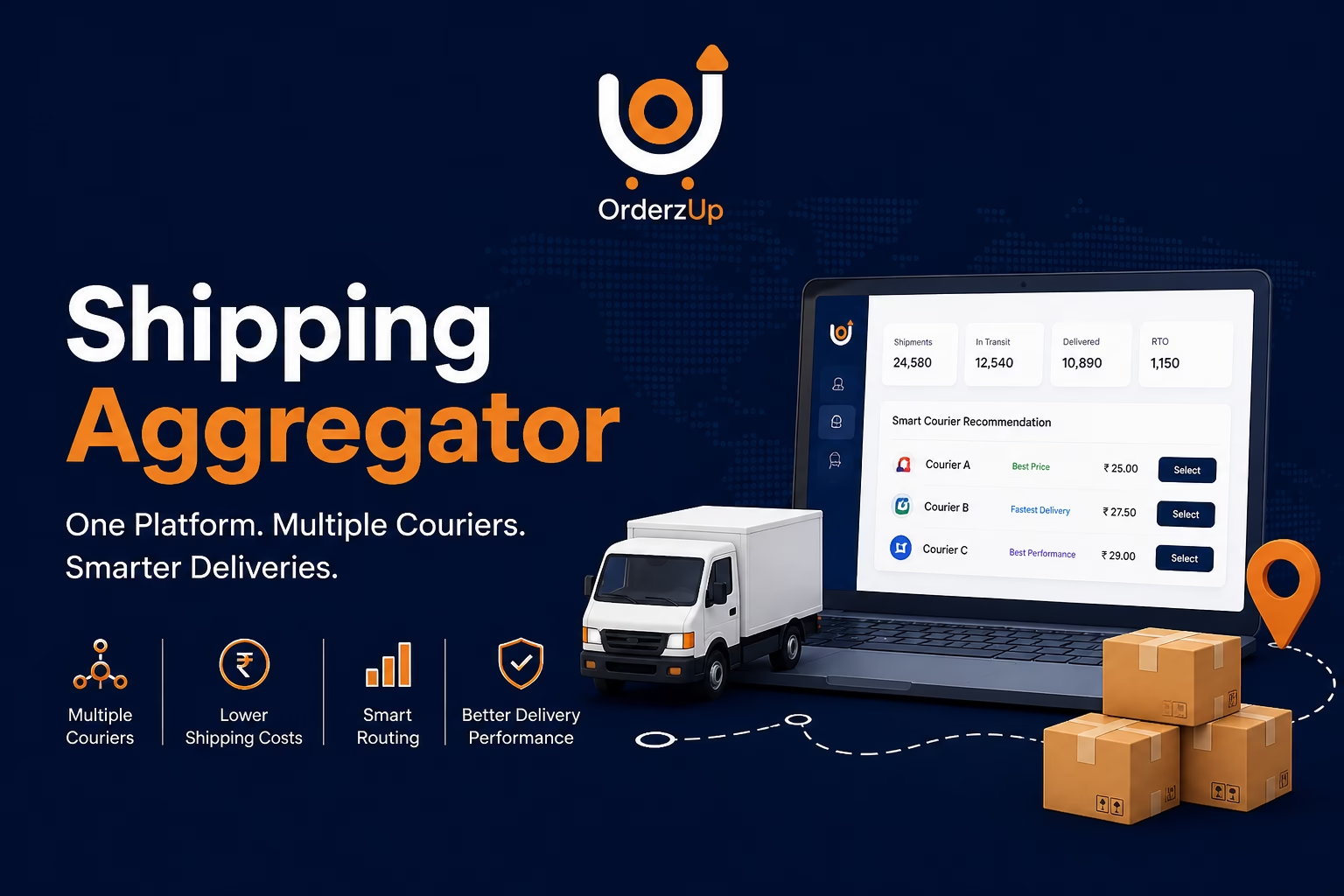
A Complete Guide for Indian eCommerce Sellers (2026)
By Team orderzup.com | Updated: May 2026 | Reading Time: ~12 minutes
Introduction: Why ‘Shipping Aggregator’ Is the Most Googled Logistics Term in India Right Now
Let’s set the scene.
You’ve launched your D2C brand. Your Instagram ads are converting. Your Shopify store is live. Orders are coming in. And then reality hits: Which courier do I use? Why is my RTO rate at 30%? Why am I paying ₹80 per shipment when my competitor ships for ₹52?
This is exactly where a shipping aggregator becomes your most valuable business tool — not just a vendor.
In 2026, India’s eCommerce market is projected to cross ₹8 lakh crore. D2C brands are multiplying faster than warehouse capacity. And in the middle of all this chaos, the one question every seller — from a Meesho reseller to a Myntra-listed fashion brand — is asking Google is: What is a shipping aggregator, and do I need one?
This guide answers everything. Definitively. From first principles.
📑 Table of Contents
- What Is a Shipping Aggregator? (The Definitive Definition)
- How a Shipping Aggregator Actually Works — Step by Step
- Shipping Aggregator vs Direct Courier vs 3PL: Key Differences
- Top Benefits of Using a Shipping Aggregator in India
- Key Features to Look for in a Shipping Aggregator Platform
- How Shipping Aggregators Reduce RTO and COD Fraud
- Shipping Aggregator for Different Business Types
- The Real Cost of NOT Using a Shipping Aggregator
- How to Choose the Best Shipping Aggregator in India (2026)
- Frequently Asked Questions
- Conclusion: Your Next Step
1. What Is a Shipping Aggregator? (The Definitive Definition)
| 📌 Quick Definition A shipping aggregator is a technology platform that integrates multiple courier and logistics partners under a single dashboard, allowing eCommerce sellers to compare shipping rates, book shipments, track orders, manage returns, and handle NDRs — all from one place — without signing individual contracts with each courier. |
In simpler terms: instead of juggling 6 different courier logins, negotiating 6 separate rate cards, and calling 6 different support teams when a shipment goes wrong — you use one platform. One login. One rate comparison engine. One tracking dashboard.
Think of it like MakeMyTrip, but for shipping. Just as MakeMyTrip aggregates flights from IndiGo, Air India, and SpiceJet so you can compare prices and book the best option — a shipping aggregator aggregates Delhivery, Bluedart, DTDC, Xpressbees, Ekart, Shadowfax, and others so you can ship smarter.
What Does a Shipping Aggregator Actually Aggregate?
| What Is Aggregated | What That Means for You |
| Courier Partners | Access 15–25 courier companies through one integration |
| Shipping Rates | Real-time rate comparison across all carriers per order |
| Tracking Data | Unified tracking from dispatch to delivery |
| NDR & RTO Workflows | Centralised non-delivery report management |
| Weight & Billing | Automated weight reconciliation to dispute overcharging |
| Analytics & Reports | Single dashboard for all shipping KPIs |
| Return Management | Reverse logistics from the same platform |
| COD Remittance | Cash-on-delivery collections consolidated and remitted faster |
This is not just a convenience feature. For a seller processing 500+ orders per day, this aggregation is the difference between a logistics team of 10 people and a logistics team of 2.
2. How a Shipping Aggregator Actually Works — Step by Step
Many sellers understand the concept but are fuzzy on the mechanics. Here’s the exact workflow, from the moment your customer places an order to the moment money hits your account.
Step 1: Order is placed on your store
Whether it’s Shopify, WooCommerce, Amazon, Meesho, or your own app — the order data flows automatically into the aggregator platform via API or plugin integration.
Step 2: Address validation fires instantly
AI-powered address validation checks the delivery address for errors, flags incomplete pincodes, and standardises the format before a shipment is even created. This alone prevents 15–20% of failed deliveries.
Step 3: Rate engine runs in real time
The platform pings all integrated courier partners simultaneously and returns the best rate for that specific order — based on weight, dimensions, destination pincode, and delivery speed preference.
Step 4: Auto-allocation or manual selection
You either manually select a courier or set smart rules (e.g., ‘For COD orders above ₹2,000 going to Tier 2 cities, use Delhivery. For prepaid under 500g to metros, use Xpressbees’).
Step 5: Shipping label is generated
A branded label is created with AWB number. The manifest is auto-prepared for courier pickup.
Step 6: Shipment is tracked centrally
From dispatch to delivery, every status update — picked up, in transit, out for delivery, delivered, RTO initiated — is visible on your aggregator dashboard. Automated WhatsApp/SMS/email notifications go to your customer.
Step 7: NDR management kicks in
If a delivery attempt fails, the platform triggers an NDR workflow — it contacts your customer, captures re-delivery instructions, and pushes them to the courier. This is where RTO battles are won or lost.
Step 8: COD remittance is tracked
For cash-on-delivery orders, the aggregator tracks collection and remittance cycles from each courier so you always know when money is coming back.
Step 9: Weight discrepancy is auto-disputed
If a courier charges you for 1.2 kg on a 500g shipment, the system flags it, raises a dispute, and recovers the overcharge — automatically.
Step 10: Analytics and reporting
You get a live view of: courier-wise performance, delivery success rates, RTO rates by region, average cost per shipment, and NPS data from customer delivery feedback.
| 💡 Pro Insight The biggest ROI from a shipping aggregator doesn’t come from the rate comparison — it comes from NDR automation and weight reconciliation. Most sellers recover ₹15,000–₹80,000/month just from weight dispute recovery alone. |
3. Shipping Aggregator vs Direct Courier vs 3PL: Key Differences
This is one of the most searched comparisons in Indian eCommerce logistics. Let’s settle it with a clean breakdown.
| Parameter | Shipping Aggregator | Direct Courier / 3PL |
| Setup Time | Hours to days (plug & play API/plugin) | Weeks to months (contract + onboarding) |
| Minimum Volume | Often zero — start with 1 shipment/day | 500–1,000+ shipments/month typically required |
| Rate Negotiation | Pre-negotiated platform rates available from Day 1 | Requires volume leverage to negotiate |
| Courier Flexibility | Switch carriers per order automatically | Locked into one or few partners |
| Technology | Full API, dashboard, analytics, NDR tools included | Basic tracking; analytics often manual |
| RTO Management | Automated NDR workflows built in | Manual follow-ups with courier support |
| Weight Reconciliation | Automated disputes raised on your behalf | Manual process — often missed |
| Cash Flow (COD) | Aggregated remittance tracking | Separate tracking per courier |
| Best For | D2C brands, SMEs, growing eCommerce sellers | Large enterprises with locked volumes |
| 🎯 Bottom Line If you’re processing under 10,000 shipments per month and working with multiple sales channels, a shipping aggregator is almost always the smarter, faster, and cheaper option. Direct courier contracts only make sense at very high volumes AND when you have a dedicated logistics team to manage them. |
4. Top Benefits of Using a Shipping Aggregator in India (2026)
💰 Significant Cost Savings
Because aggregators bring collective volume from thousands of sellers, they negotiate wholesale rates with courier companies — rates you could never access as an individual seller. Most sellers save 20–40% on per-shipment cost within the first month of switching.
⚡ Faster Go-to-Market
You don’t need to negotiate contracts, go through courier onboarding, or integrate APIs individually. With a shipping aggregator, you can start shipping within hours of signing up. This is especially critical for new D2C brands that need to launch fast.
🗺️ Pan-India Coverage Instantly
No single courier covers every pincode in India serviceably. By accessing multiple couriers through one platform, you get effective Pan-India reach — including Tier 2, Tier 3 cities and remote areas — from Day 1.
📊 Data-Driven Shipping Decisions
Every shipment generates data. Which courier delivers fastest in Rajasthan? Which has the lowest RTO in Bengaluru? Which performs best for COD orders above ₹1,500? Aggregator platforms surface this data so you can make smarter routing decisions continuously.
🔄 Seamless Returns Management
Reverse logistics — managing returns from customers back to your warehouse — is a nightmare when managed manually. Aggregator platforms centralise return pickups, tracking, and RTO shipments so your team isn’t drowning in courier calls.
📦 Branded Tracking Experience
Modern shipping aggregators let you send branded tracking pages and notifications — with your logo, brand colours, and upsell widgets. This turns the post-purchase journey into a brand-building touchpoint instead of an anxiety-inducing wait.
🤖 AI-Powered Intelligence
In 2026, the best shipping aggregators have moved well beyond rate comparison. They now offer AI-driven COD fraud scoring, smart carrier selection based on historical performance, automated NDR calling, predictive RTO risk scores, and AI address validation — all running quietly in the background on every order.
5. Key Features to Look for in a Shipping Aggregator Platform
Not all shipping aggregators are built equal. Here’s what separates a good platform from a great one — specifically for the Indian market in 2026.
| Feature | Why It Matters for Indian Sellers |
| Multi-Carrier Integration (15+) | More carriers = better rate + serviceability coverage across India |
| Real-Time Rate Comparison | Prevent overpaying on every shipment — the savings compound daily |
| Smart Carrier Allocation Rules | Automate ‘best courier for this order type’ logic without manual review |
| AI Address Validation | Catches wrong addresses before dispatch — cuts failed deliveries & RTO |
| NDR Management Automation | Re-engagement workflows that slash RTO from 25%+ to under 10% |
| COD Fraud Detection | Score each COD order for fraud risk before fulfilling |
| Weight Reconciliation | Auto-dispute incorrect billing — recover lakhs per year |
| Shopify / WooCommerce / Unicommerce Integration | Plug into your existing stack without custom development |
| Branded Tracking Pages | Builds customer trust, reduces WISMO calls, enables post-purchase upsell |
| COD Remittance Tracking | Know exactly when COD money is arriving — critical for working capital |
| Analytics Dashboard | Courier performance, RTO rates, city-wise delivery success — in one view |
| WhatsApp + SMS Notifications | Automated delivery updates reduce customer anxiety and support tickets |
| API Access | For custom integrations, ERP connections, or headless commerce setups |
| 24×7 Support with SLA | When a critical shipment fails, you need human help — not just a chatbot |
6. How Shipping Aggregators Reduce RTO and COD Fraud in 2026
RTO (Return to Origin) is the single biggest profit killer for Indian eCommerce brands. Industry average RTO rates in India hover between 20–35% depending on the category. For a D2C brand doing 1,000 COD orders per month at ₹1,200 average order value with a 28% RTO rate — that’s ₹3,36,000 worth of orders bouncing back every month, plus ₹40–70 per RTO shipment in direct courier cost.
Shipping aggregators tackle RTO from multiple angles simultaneously:
AI Address Validation Before Dispatch
Wrong addresses are the silent killer of delivery success. AI-powered validation checks addresses at the moment of order placement — flagging apartments without flat numbers, incorrect pincode-city combinations, and incomplete landmark data — before the shipment even leaves your warehouse.
Automated NDR (Non-Delivery Report) Management
When a first delivery attempt fails, the clock starts ticking. Without an automated NDR system, couriers attempt delivery once or twice and then trigger RTO. With an aggregator’s NDR workflow, the customer gets an automated WhatsApp or IVR call within hours, capturing re-delivery preferences (time slot, alternate address, contact person) and relaying them back to the courier in real time.
COD Order Fraud Scoring
Not every COD order is a genuine order. Platforms in 2026 use machine learning models trained on millions of Indian eCommerce transactions to score each COD order for fraud risk. Signals include: new phone number with no delivery history, address in a known high-RTO pincode, suspiciously high order value for a first-time buyer, or mismatch between billing and delivery addresses. High-risk orders can be held for manual review or automatically pushed to prepaid.
Smart Carrier Selection for Better Delivery Rates
Some couriers perform significantly better in certain geographies. A shipping aggregator with historical data can automatically route Karnataka orders to the carrier with the highest first-attempt delivery rate in that state — rather than defaulting to one courier for everything.
Customer Communication Automation
A significant portion of RTO happens because customers forget about their order, aren’t available at delivery time, or aren’t expecting the courier. Proactive SMS/WhatsApp messages — ‘Your order is out for delivery today between 2–6 PM’ — dramatically improve first-attempt delivery success.
| 📊 Real Impact D2C brands using orderzup.com’s AI-powered NDR automation have reported reducing RTO from 27% to under 11% within 60 days — without changing their courier partners. The tech was the only variable. |
7. Shipping Aggregator for Different Business Types
A common misconception is that shipping aggregators are only for large sellers. In 2026, the truth is the exact opposite — aggregators are the great equaliser, giving small sellers enterprise-grade logistics infrastructure from Day 1.
▶ D2C Brands (Direct-to-Consumer)
Best fit for RTO reduction, branded tracking, COD fraud scoring. You control the narrative from ‘Order Confirmed’ to ‘Delivered’ — every touchpoint can reflect your brand.
▶ Shopify / WooCommerce Sellers
Plug-and-play integrations mean you’re up and running in under 2 hours. Most aggregators have native Shopify apps that auto-sync orders and push tracking back to your store.
▶ Marketplaces Sellers (Amazon, Flipkart, Meesho)
For sellers using self-ship mode on marketplaces, aggregators provide rate comparison and label generation for marketplace orders alongside D2C orders — all from one place.
▶ Dropshipping Businesses
Since you don’t hold inventory, logistics agility is everything. A shipping aggregator lets you route orders from multiple supplier locations through the best carrier without manually managing each one.
▶ Social Commerce Sellers (Instagram, WhatsApp)
Sellers taking orders via DMs and WhatsApp can use aggregator platforms as their entire logistics backend — from order creation to delivery confirmation — even without a formal website.
▶ B2B / Wholesale Sellers
For heavy and bulky shipments, aggregators provide access to surface freight and part-truck-load (PTL) options alongside express couriers — so you always have the right solution for the right shipment size.
8. The Real Cost of NOT Using a Shipping Aggregator
Most sellers calculate what a shipping aggregator costs. Few calculate what NOT using one costs. Let’s do the math for a mid-size seller doing 800 shipments per month.
| Hidden Cost Area | Estimated Monthly Loss |
| Overpaying on shipping rates vs platform rates | ₹12,000 – ₹24,000 |
| RTO cost at 25% rate (800 orders × 25% × ₹55 RTO fee) | ₹11,000 – ₹15,000 |
| Weight reconciliation disputes not raised | ₹8,000 – ₹20,000 |
| Manual tracking & customer service overhead (2 staff) | ₹18,000 – ₹30,000 |
| Lost sales from poor delivery experience & bad reviews | ₹20,000 – ₹50,000 |
| COD fraud orders fulfilled unnecessarily | ₹5,000 – ₹15,000 |
| TOTAL ESTIMATED MONTHLY LOSS | ₹74,000 – ₹1,54,000 |
| 🧮 The Math Is Clear For a seller doing 800 shipments/month, not using a shipping aggregator likely costs ₹75,000–₹1.5 lakh per month in preventable losses. Most aggregator platforms charge a small per-shipment fee or are free with courier usage — the ROI is not even a close call. |
9. How to Choose the Best Shipping Aggregator in India (2026)
With dozens of options now available in the Indian market, here’s a no-nonsense framework for evaluating which shipping aggregator is right for your business:
- Courier network: Do they have your preferred carriers? Do they have strong coverage in the states where most of your orders go?
- Your sales channel: Does the platform integrate natively with Shopify, WooCommerce, Unicommerce, or wherever your orders come from?
- RTO tooling: Do they have automated NDR management? AI address validation? These are non-negotiables in 2026.
- COD capabilities: If COD is significant for your business, check remittance frequency, COD fraud scoring, and COD-to-prepaid nudge features.
- Pricing model: Understand per-shipment fees, monthly subscription costs, and whether there are setup or integration fees.
- Support quality: Test their support before signing up. Raise a dummy query. See how fast they respond and whether the answer is actually helpful.
- Analytics depth: Can the platform show you RTO rates by courier, delivery performance by region, and weight dispute recovery amounts?
- Technology reliability: Check uptime SLAs, API response times, and whether the platform has experienced major outages in the past year.
| ✅ orderzup.com Advantage orderzup.com is built specifically for Indian D2C brands and eCommerce sellers who are serious about reducing RTO, automating NDR management, and scaling shipping operations without scaling headcount. Explore the platform at orderzup.com. |
10. Frequently Asked Questions (FAQ)
This section is optimised for Google’s People Also Ask, AI Overview citations, and voice search answers.
Q: What is a shipping aggregator in simple terms?
A: A shipping aggregator is a platform that connects multiple courier companies into one interface, so eCommerce sellers can compare rates, book shipments, track orders, and manage returns without dealing with each courier separately.
Q: Is a shipping aggregator better than using a direct courier?
A: For most Indian eCommerce sellers — especially those processing under 10,000 shipments per month — yes. Aggregators offer lower rates, better technology, multi-carrier flexibility, and automated RTO/NDR tools that direct courier relationships don’t include.
Q: Are shipping aggregators free to use?
A: Most shipping aggregators in India are free to use — you pay only for the shipments you book. Some advanced platforms charge a small monthly subscription for premium features like AI fraud detection, advanced analytics, or branded tracking pages.
Q: Which is the best shipping aggregator in India in 2026?
A: The best shipping aggregator depends on your business type, volume, and specific needs. Key platforms in India include orderzup.com, Shiprocket, Pickrr (now Shipway), Shyplite, and NimbusPost. Evaluate based on courier network, RTO tools, COD features, and technology quality.
Q: Can I use a shipping aggregator for COD orders?
A: Yes. All major shipping aggregators in India support COD (Cash on Delivery) shipments. The best platforms also offer COD fraud detection, COD-to-prepaid nudge flows, and remittance tracking for COD payments.
Q: How does a shipping aggregator reduce RTO?
A: Through a combination of AI address validation (before dispatch), automated NDR management (when delivery fails), customer communication workflows (WhatsApp/SMS re-engagement), and smart carrier selection (routing to the carrier with the best delivery success rate for that geography).
Q: What is the difference between a shipping aggregator and a 3PL?
A: A shipping aggregator provides software to manage multiple courier partners. A 3PL (Third-Party Logistics) provider physically warehouses your inventory and ships on your behalf. Some platforms offer both. If you hold inventory yourself, you need a shipping aggregator. If you want someone to store and ship for you, you need a 3PL.
Q: Does a shipping aggregator work with Shopify?
A: Yes. Most major shipping aggregators offer native Shopify apps or API integrations that auto-sync orders, generate labels, and push tracking updates back to your Shopify store and to your customers — all in real time.
11. Conclusion: The Smartest Decision You Can Make for Your eCommerce Business Today
In 2026, the Indian eCommerce market does not reward the brand with the best product alone. It rewards the brand with the best execution — and execution, at its core, is logistics.
A shipping aggregator is not a luxury. It is the operational backbone of every serious eCommerce brand in India today. It is the difference between shipping chaos and shipping clarity. Between a 28% RTO rate and a 9% RTO rate. Between losing ₹1 lakh per month to logistics inefficiencies and reinvesting that money into marketing, inventory, and growth.
The question in 2026 is no longer ‘Should I use a shipping aggregator?’ The question is: ‘Which one should I use, and am I using it to its full potential?’
orderzup.com is built by people who understand the pain of Indian eCommerce logistics intimately — and engineered to solve it systematically. From AI address validation to COD fraud scoring to automated NDR management, it’s the platform built for D2C brands that are serious about scaling.
| 🚀 Ready to Start Shipping Smarter? Sign up on orderzup.com today — free to get started, no minimum volume required. Connect your store, compare courier rates in real time, and start reducing RTO from your very first shipment. |